Thursday, December 29, 2011

5 Things to do with Your Children During the Holiday Break

Not sure how to entertain your kids during their holiday break? Patch.com has some great ideas.

  1. Roller Skating at BonaVenture - All this week, the roller skating rink has open skating from 1 p.m.-4 p.m.  Enjoy rolling across the wooden floors for some fun and exercise.  Or if you prefer ice skating, the Farmington Hills Ice Arena offers a mid-day open skate Monday-Friday from 11:30 a.m. to 1:20 p.m. this week.
  2. Marvin's Marvelous Mechanical Museum - Walk into one of the World Almanac's 100 most unusual museums in the U.S., right here in your own community. Located in Hunter's Square on Orchard Lake and 14 Mile Roads, Marvin's is a treasure of vintage coin-operated games and oddities, pinball machines, arcade-style video games, and even a gypsy who will tell your fortune. Children of all ages will find something to enjoy and play here.
  3. Jungle Java - This jungle-themed indoor play center offers multiple slides, climbers, and obstacle courses to help children burn off some energy. Parents can enjoy a cup of coffee on the sofas or get up and climb and slide with their children. The center is open 9 a.m.-8 p.m. Monday-Saturday and 10 a.m.-8 p.m. Sunday.
  4. The Farmington Hills Main Library and Farmington Branch Library - The libraries offer hours of fun during the holiday break. Children can play in the tree house (Farmington branch), color pages, play on the computer, read and check out books, play with toys or pick out movies to take home.  At 2 p.m. on Wednesday, the Main Library is hosting a Recycled Fashion Show where children in grades 5 and up can use recyclables to create one-of-a-kind fashions, then model their creations. On Wednesday night, bring a blanket and a picnic dinner to watch The Polar Express at the Farmington branch.
  5. Zap Zone Extreme - Enjoy playing glo golf, laser tag, mini-bowling, or the many arcade games offered here. Zap Zone is open from 4 p.m.-10 p.m. Monday-Thursday and 3 p.m.-12 a.m. on Friday. On Tuesday, each game is only $4.

Read more http://farmington-mi.patch.com/articles/5-6b5875ef

Thursday, December 22, 2011

Toyota Motors teases the Lexus Concept bound for Detroit

If this is what the interior looks like, I can't wait to see the rest of the car!


Shown to the left, the latest teaser of the new Lexus Concept coming to Detroit features a unique design, with continuous flowing lines filling the cabin – all of which are wrapped in embroidered leather, wood, and other high quality materials. Lexus and parent company Toyota still haven’t offered any real information on this new Concept but the steeply sloping roofline supports that idea that this new Lexus will be a sports car. However, in fine Lexus fashion, we can expect the Concept being unveiled at the 2012 Detroit Auto Show to offer all premium interior finishes, a high end infotainment system and a comfortable – yet sporty- race inspired seat also clad in leather.

The only official information offered on the Lexus Concept coming to the Detroit Auto Show is that the car was designed at the Calty design studio in Newport Beach, California. We do not know what type of vehicle this is, whether it sports a traditional or hybrid (or electric) drivetrain or what – if any – existing Toyota product the new Lexus Concept will be based on.

After seeing the initial teaser of the new Lexus Concept set to debut next month in Detroit (click here to see the front end), I speculated that this could be a sports car based on the Toyota GT-86, the Scion FR-S and the Subaru BRZ. You can click here for a look at the first teaser, showing the front end of the new Lexus Concept which I believe looks to carry some of the lines of the Toyo-baru rear wheel drive sports car. Lexus has shown their sporty spirit with models like the IS-F, the GS350 F Sport and, of course, the incredible Lexus LFA supercar. The issue is that the sport-inspired IS and GS models are the range topping so they are among the most expensive vehicles in the lineup and the LFA carries a $375,000 price tag…making it well out of reach of even most Lexus buyers. However, Toyota and Subaru have seemingly done a great job of developing the new rear wheel drive, Boxer engine powered vehicle so packing the Toyota GT-86 full of luxury amenities and giving it a Lexus name of its own could help Lexus appeal to a younger crowd with a lower price than any of the other sporty Lexus models.

Of course, this is all speculation and until the 2012 North American International Auto Show opens in January, we may not know exactly what Lexus is going to unveil. Hopefully Lexus and parent company Toyota will continue to issue teasers of what could be a very exciting new concept from Lexus.


Read more http://www.torquenews.com/106/toyota-motors-teases-lexus-concept-bound-detroit

Tuesday, December 13, 2011

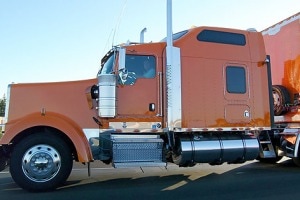
How to Share the Road with Truckers

Excellent article about how regular drivers can safely share the road with tractor trailers. Especially with holiday travel coming up, I’m sure we’ll all have plenty of chances to put these tips into practice!

Everybody has a horror story to tell about an encounter they've had with an 18-wheeler on the Interstate, and how they were nearly killed by the inattentiveness of the truck driver. News programs like Dateline NBC and 60 Minutes feed this fear with selectively edited stories regarding truck safety. But what nobody seems to consider is that they themselves may have caused the problem because of ignorance about what is involved in driving a truck, or by engaging in righteous driving behavior that did nothing but endanger their own lives and those of the people they care most about.

Personally, we've seen rude truckers hog the road, and we've seen dimwitted drivers set themselves up for what could be a very painful, if not deadly, lesson. Furthermore, not all trucks traveling the nation's highways are properly maintained, due to a lack of finances or pure laziness. But for most truck drivers, who are paid by the mile and are held responsible for damaged goods, their lives and livelihoods depend on driving a well-maintained truck carefully, and getting freight to its destination on time.

Tractor trailer trucks are responsible for carrying nearly 30 percent of all the cargo shipped in the United States. Technology and improved roadways have allowed the use of trucks for shipping to increase steadily since the 1920s, resulting in larger vehicles and heavier loads. Yet, traffic fatalities involving trucks have steadily declined during the past 50 years, except for a small spike upward in the early 1980s right after the trucking industry was deregulated. Fatalities due to accidents involving semi trucks total 5,000 annually on average, with the vast majority of those fatalities suffered by occupants of passenger vehicles that collided with a truck. As motorists who must share the road with semi trucks, we can do our part to help reduce this number even further if we simply take the time to follow a few simple driving rules and try to understand how difficult it is to maneuver a tractor-trailer in traffic.

We asked Michael Taylor, transportation special programs developer for the Tractor Trailer Training Program at Triton College in River Grove, Ill., what the top five pet peeves truckers had with fellow motorists were. Here is his list:

1) Riding in a trucker's blind spots. Trucks have large blind spots to the right and rear of the vehicle. Smaller blind spots exist on the right front corner and mid-left side of the truck. The worst thing a driver can do is chug along in the trucker's blind spot, where he cannot be seen. If you're going to pass a truck, do it and get it over with. Don't sit alongside with the cruise control set 1 mph faster than the truck is traveling.

2) Cut-offs. Don't try to sneak into a small gap in traffic ahead of a truck. Don't get in front of a truck and then brake to make a turn. Trucks take as much as three times the distance to stop as the average passenger car, and you're only risking your own life by cutting a truck off and then slowing down in front of it.

3) Impatience while reversing. Motorists need to understand that it takes time and concentration to back a 48-foot trailer up without hitting anything. Sometimes a truck driver needs to make several attempts to reverse into tight quarters. Keep your cool and let the trucker do her job.

4) Don't play policeman. Don't try to make a truck driver conform to a bureaucrat's idea of what is right and wrong on the highway. As an example, Taylor cited the way truck drivers handle hilly terrain on the highway. A fully loaded truck slows way down going up a hill. On the way down the other side of the hill, a fully loaded truck gathers speed quickly. Truckers like to use that speed to help the truck up the next hill. Do not sit in the passing lane going the speed limit. Let the truck driver pass, and let the Highway Patrol worry about citing the trucker for breaking the law.

5) No assistance in lane changes or merges. It's not easy to get a 22-foot tractor and 48-foot trailer into traffic easily. If a trucker has his turn signal blinking, leave room for the truck to merge or change lanes. Indicate your willingness to allow the truck in by flashing your lights.

According to "Sharing the Road," a booklet distributed by John Deere Transportation Insurance, the three most common types of accidents involving heavy trucks involve the following:

1) Crashes caused by the truck's inability to stop in time.2) Crashes caused by a motorist trying to pass a truck on the right while the truck is making a right-hand turn. Also known as the right turn squeeze.3) Crashes caused by a motorist riding in the trucker's blind spots. Use the following rule of thumb: If you cannot see the truck driver in his mirrors, he probably cannot see you.

By taking simple common-sense steps to protect yourself and your family when driving near large trucks, traffic fatalities will continue to drop. Over the years, the trucking industry has improved the quality of truck drivers by making it more difficult to qualify for and keep a Commercial Driver's License (CDL). Mandatory drug testing has also been instituted. In fact, the National Highway Traffic Safety Administration (NHTSA) published the following data in 2008. The intoxication rate for drivers involved in fatal accidents was:

27% for motorcycle riders 23% for light truck drivers (pickups and SUVs, that is) 23% for passenger car drivers 1% for truck drivers

Still, more work must be done to combat tightly scheduled deliveries, overbearing stacks of paperwork and driver fatigue caused by federal regulations that work against the human body's natural circadian rhythm.

After meeting with truck driving instructors at Triton College, with representatives from the Illinois Transportation Association and learning what it takes to pilot a tractor-trailer by taking the wheel myself, we joined Taylor for a ride in a brand-new empty tanker truck.

We covered suburban roads during a half-hour loop just to the southeastern side of O'Hare airport. During our 30-minute ride, two motorists turned left across traffic directly in front of the truck. One young woman in a Toyota Celica crossed no more than 50 feet in front of us as she zoomed onto a side street. An older couple in a Dodge Grand Caravan turned in front of our International tractor, and incredibly, slowed so they wouldn't scrape the van on a steep driveway apron to a convenience store. A dude in a Camaro RS blasted by on the left, cut in front of the truck and stopped at a red light we were approaching. When the light turned green, he turned right.

These are the kinds of driving habits that we must break for truck-related accident rates to drop even lower. After a day at truck driving school, we left Chicago for Denver in a Subaru Outback. During that evening and the next day traveling I-80 and I-76, we were keenly aware of the needs of the truckers with whom we shared the road. We behaved more courteously toward truck drivers and fellow motorists than usual, and exercised more patience. We doubt very much that by driving more defensively and less aggressively we arrived in Denver any sooner than we would have had we not let that Kenworth into our lane back in Iowa or had we tried to beat that Freightliner to the construction zone near Lincoln, Neb. We do feel, however, that our trip was a safer one, that we had done our part to make highway travel better. Now it's time to do yours.

Read more http://www.edmunds.com/driving-tips/how-to-share-the-road-with-truckers.html

Monday, December 5, 2011

The Lexus Fashion Workshop: Four Original Designs Made of Recyclable Lexus CT Hybrid Parts

Ever wondered what a dismantled car would look like as a trench coat? No? Lexus did.

Elevating the notion of recycling to an art form, Lexus challenged four of fashion’s most inventive designers to rethink their notions of automotive design for an advertising campaign to appear in Vogue. Using some of the more than 2,000 individual parts of a completely dismantled Lexus CT hybrid, a vehicle that is 90 percent recyclable*, the designers created fashionable works of art as part of The Lexus Fashion Workshop.

From crank bearings to exhaust gaskets, the designers took on the challenge with verve, turning some of the best engineered auto parts into innovative fashion accessories – all while driving home the beauty of recycling.

“Environmental Crown of Virtue”—A truly head-turning piece designed by Moss Lipow using a transmission starter and exhaust manifold gasket.

“The Valve Collection”—Designed by jewelry creator Eddie Borgo using valve lifters, crank bearings and hose clamps.

“Nomadic Sanctuary”—A sleek trench coat, shorts and clutch designed by John Patrick, featuring floor mats made from plant-based plastic, sustainable sound-dampening material, wire harness, leather seat covers and cargo covers.

“The Luna Shoe”—Created by Alejandro Ingelmo using armrest leather trim and clear plastic tubing.

“Merging the worlds of luxury automobiles, art and fashion is another example of how Lexus is 'Engineering Amazing' or maybe more appropriately, 'Engineering Unexpected',” said Brian Smith, vice president of marketing for Lexus. “We were able to challenge four designers to turn one of our most progressive hybrid vehicles into innovative fashion pieces, inspiring the designers, and the world, to see things differently.”

The four pieces will be highlighted in a six-page advertisement in the January 2012 issue of Vogue. Behind-the-scenes videos of the Lexus CT hybrid being dismantled piece-by-piece are available at Vogue.com/Promotions/Lexus. Additionally, a series of exclusive interviews with the four designers will be posted throughout December.

The collection will be on display December 1-2, 2011, opening day of Art Basel Miami Beach, one of the most prestigious art show in the Americas. The pieces will be sold at private auction during Art Basel Miami Beach, with proceeds benefiting the Council of Fashion Designers of America/Vogue Fashion Fund (CFDA), a not-for-profit trade association representing more than 400 of America’s foremost womenswear, menswear, jewelry, and accessory designers.

Read more http://pressroom.toyota.com/releases/lexus+unveils+lexus+fashion+workshop+four+original+designs+ct+hybrid+parts.htm 

Monday, November 28, 2011

Farmington Hills Youth Performing Tonight at the Detroit Opera House

Congratulations to our talented local performers!

Anne Koziara, 13, will sing in the holiday season Monday on the stage of the Detroit Opera House along with five other Farmington-Farmington Hills area students.

Koziara is part of the Michigan Opera Theatre Children's Chorus, which presents its fifth annual A Winter Fantasy holiday concert and fundraiser at 7 p.m. Monday, Nov. 28.

“It really gets you in the holiday spirit,” said Koziara, of Farmington Hills, who attends Our Lady of Sorrows in Farmington and is in her third season singing in A Winter Fantasy.

Avery Rausch (North Farmington High School), Farrah Mechael (Mercy High School), Tamara Mechael (Our Lady of Sorrows) and Elena Dzousa (Warner Upper Elementary), all from Farmington Hills; and Ryan Kotlinski (Our Lady of Sorrows) from Farmington are also appearing in the performance.

A Winter's Fantasy features a variety of music, including holiday favorites; excerpts from Gilbert and Sullivan's operetta H.M.S. Pinafore, which the choir performs in spring; and pieces by Bach, Gounod, Whitacre and more.

A silent auction and raffle begin at 6 p.m., with proceeds benefitting the chorus. The auction includes a luxury suite at Comerica Park and box seats to Wicked at the Detroit Opera House.

Many opportunities

The chorus is a permanent ensemble of Michigan Opera Theatre, formed in 2007 for metro Detroit youth interested in vocal musical theatrical art. The choir performs as a separate ensemble as well as in MOT productions.

The chorus accepts children ages 10-16 by audition. Rehearsals are held twice a week.

Chorus members learn various aspects of opera and voice training in a professional environment with renowned opera singers and voice specialists.

Koziara takes music class at OLS and is in the OLS church choir. The chorus gives her opportunities she would not have had otherwise, she said.

“We get to perform with adults and professionals,” said Koziara, whose performances with MOT include the recently staged Carmina Burana. “It's great because we get to see what it's like in the adult world.”

She doesn't know if she'll become a professional singer but said “it's something I can always put on my resume.”

Diverse group

“One of the things I like as a mom, when they are doing the mainstage opera with adults, they have such diversity,” said Michele Koziara. “They have singers from all over the world and have the opportunity to experience working with world class professionals. It's such an incredible opportunity.”

Tickets are $28 for adults, $15 for ages 16 and under, and free for children 4 and under. Tickets include strolling hors d'oeuvres and dessert.

Advance tickets are available at: www.ticketderby.com, or by contacting chorus administrator Megan Warzecha at             (248) 914-1966       or mwarzecha@motopera.org. Tickets are also available at the door.

MOT is supported by private donations, foundation and corporate grants, the State of Michigan through the Michigan Council for the Arts and Cultural Affairs, and by the National Endowment for the Arts, a federal Agency.

The chorus website is: www.motcc.org.

Read more http://www.hometownlife.com/article/20111127/NEWS06/111270429

Wednesday, November 23, 2011

Farmington Hills Fire Department Warns About Turkey Fryers

Happy (almost) Thanksgiving! Please remember to practice safe turkey cooking:

(A Farmington Hills firefighter lower a turkey into a deep fryer as the department tests whether deep frying a turkey poses serious safety risks. Credit Farmington Hills Fire Department)

This article and safety advice has been released for the past four or five years, yet we still get information every holiday season on residents who defy the odds and risks associated with turkey fryers.

It’s possible that some of these residents are actually monitoring their turkey the entire time they are being cooked, but for some reason, we doubt it. And if they are standing there, watching the turkey being deep fried for hours, it would have been much easier to place it in the oven and set a timer to check on it when it is finished cooking.

With that said, the Farmington Hills Fire Department, along with the National Fire Protection Association (NFPA) and Underwriters Laboratory (U.L.), are strongly discouraging the use of outdoor gas-fueled turkey fryers that immerse a turkey in hot oil.

Many people rave about the taste and time saved in the kitchen, but most people are sacrificing safety for good taste.

These fryers use a substantial amount of cooking oil at a high temperature, and almost all units pose a significant safety risk, as hot oil will be released at some point during the cooking process. The use of these fryers has led to devastating burns, other injuries and homes completely destroyed by fire. The Fire Department urges those who prefer a fried turkey to consider a new type of “oil-less” turkey fryer.

Here are some hazards associated with the use of turkey fryers:

  • Most units easily tip over, spilling the hot oil from the cooking pot.
  • If the pot is overfilled with oil, the oil may spill out of the unit when the turkey is placed into the pot. Oil may drain onto the unprotected burner or flames, causing a fire to engulf the entire unit and its surroundings.
  • A partially frozen turkey can cause a spillover effect. This too may result in a devastating fire.
  • These units have no thermostat controls, and they have the potential to overheat to the point of combustion.
  • The lid and handles on the sides of the cooking pot get dangerously hot, and pose a severe burn hazard.

If these concerns aren’t enough to discourage you from using a turkey fryer, consider the following tips to prevent a fire or disaster while cooking your turkey:

  • Always use a turkey fryer outdoors, away from anything combustible or flammable.
  • Never use them in a garage, under a shed or on a wooden deck.
  • Always use them on a flat surface to reduce the possibility of tipping over.
  • Never leave your fryer unattended.
  • Never let children or pets near the frying unit.
  • Do not overfill the pot. Follow manufacturer’s guidelines.
  • Be sure your turkey is thoroughly thawed before placing it into the hot oil.
  • Use oven mitts to prevent burning your hands.
  • Have a portable fire extinguisher handy or ready to use if needed. Dial 911 if there is a fire.
  • If the weather is forecasting rain or snow, consider scrapping the entire frying option, as water and hot oil do not mix!

Finally, the hot oil inside the pot will remain hot for several hours after your turkey has been removed. Continue to follow the tips and recommendations for safe use until the oil has completely cooled.

Be safe and enjoy the upcoming holiday season with your family and friends!

Lieutenant Denny Hughes is a fire and safety educator with the Farmington Hills (MI) Fire Department. He may be reached at 248-871-2823 or at DHughes@fhgov.com. Some material re-printed with permission of the NFPA and UL

About this column: Local emergency services providers share safe and sound prevention tips, ideas and information.

Read more http://farmington-mi.patch.com/articles/farmington-hills-fire-department-warns-about-turkey-fryers#photo-3389660

Wednesday, November 16, 2011

Toyota says hybrids offer best fuel economy gains

Hybrids are a “core technology,” says Toyota.

Toyota will explore various power trains and fuel sources, but sees hybrids as the core technology for improving fuel economy, an engineering manager says.
Ankil Shah, manager for materials engineering at Toyota's technical center here, says hybrids offer "the best short- to midterm gains in fuel economy."

Given that battery energy density is far less than that of liquid fuels such as gasoline and diesel fuel, the cost and weight of battery packs needed to produce an acceptable range in an electric vehicle are prohibitive, Shah said.

"This makes electric vehicles and plug-in electric vehicles a great challenge in a mainstream vehicle," Shah said recently in a speech at a conference sponsored by Plastics News on lightweight and electric vehicles.

Plastics News, like Automotive News, is published by Crain Communications.

Toyota has sold 3 million hybrids globally, Shah said. The Prius is by far the best-selling hybrid in the United States, with sales of 104,251 units this year through October--nearly half of the 211,598 total U.S. hybrid sales.

Aside from market leadership, Toyota uses the hybrid architecture as the basis for other alternative drivetrains such as plug-ins and EVs, he said: "Hybrid components can be easily adapted to other power train systems."

Shah said that Toyota sees a future for hydrogen fuel cell-powered vehicles, and plans to begin commercial sales in 2015. Its fuel cell vehicle has a range of nearly 500 miles per tankful and functions well in cold weather, he said.

Toyota sees fuel cell propulsion as optimum for large vehicles such as buses and delivery trucks, Shah said, particularly if they travel long-distance routes.


Read more: http://reviews.cnet.com/8301-13746_7-57324363-48/toyota-says-hybrids-offer-best-fuel-economy-gains/

Picture from: http://www.toyotainthenews.com/wp-content/uploads/2010/05/toyota-hybrid-x-concept-image.jpg

Friday, November 11, 2011

Hills city hall honored by Keep Michigan Beautiful

Congratulations to our beautiful city!

The City of Farmington Hills was honored at the Keep Michigan Beautiful Awards at the annual meeting and awards program held in October in Grand Rapids.

Keep Michigan Beautiful is a statewide organization that promotes beautification and environmental awareness with an emphasis on volunteerism.

The City of Farmington Hills was honored with the Michigan Plaque for the “Revitalization of Farmington Hills City Hall.” The Michigan Plaque is given for outstanding effort by a group or an individual in furthering the goals of Keep Michigan Beautiful.

The “Revitalization of Farmington Hills City Hall” involved a renovation and addition project that utilized pervious pavement, solar panels, heat pumps, and a green roof in a successful effort to be environmentally responsible and energy efficient. The project has been recognized by the U.S. Green Building Council with LEED Gold Certification for its sustainable building practices.

Farmington Hills City Manager Steve Brock and Beautification Commissioners were present at the awards ceremony to receive the award and to honor all the winners.

Read more http://www.hometownlife.com/article/20111110/NEWS06/111100529

Picture from http://www.fhgov.com/Business/Welcome.asp

Tuesday, November 1, 2011

Toyota Shows Machines to Help Sick, Elderly Move

This new technology would be amazing to have in Michigan with its large population of elderly residents. Can’t wait to see these products hit the market!

Toyota unveiled its ambitions for high-tech health care Tuesday, displaying experimental robots that the auto giant says can lift disabled patients from their hospital beds or help them walk.

The company aims to commercialize products such as its "independent walk assist" device sometime after 2013 — seeking to position itself in an industry with great potential in Japan, one of the world's most rapidly aging nations.

Eiichi Saitoh, a professor in rehabilitation medicine, demonstrated the "walk assist" device on Tuesday, strapping the computerized metallic brace onto his right leg, which was paralyzed by polio.

He showed reporters at a Toyota facility in Tokyo how the brace could bend at the knee as needed, allowing him to walk more naturally and rise from a chair with greater ease than the walker he now uses. Wearing a backpack-like battery, Saitoh walked up and down a flight of stairs, smiling with delight.

Saitoh said he had tried Toyota's machines with patients and was confident they helped people recover more quickly from strokes and other ailments that curtailed movement.

"It may be difficult to predict the future, but the era of an aging society is definitely coming," he said. "We need partner robots to enrich our lives."

Toyota also demonstrated an intelligent machine with padded arms that can help health care workers lift disabled patients from their beds and then carry them around. Another mobility aid worked like a skateboard to help people relearn balance.

Toyota officials said technology for autos such as sensors, motors and computer software are being used in such computerized gadgets to help people get around, and what they learn about mobility for people will likely be of use in future cars.

Prices and overseas sales plans of all the machines are still undecided, according to Toyota.

General Manager Akifumi Tamaoki said more tests were needed on more people to insure safety and reliability, and gain user feedback, but the commercial products in the works were going to be smaller and lighter than the prototype versions shown.

"We define gentle and smart machines as partner robots," he said.

Toyota has previously shown human-shaped robots that played the trumpet and violin, and those that move around and talk about Toyota cars at showrooms.

Rival Japanese automaker Honda Motor Co. has developed a sophisticated humanoid robot called Asimo, which can run, talk and dance. But Asimo has been limited to showrooms and labs and has yet to enter any hospital or home.

Toyota faces competition from other manufacturers that are all working on gadgets to tap into the health care business. Honda also has demonstrated machines worn on the legs that help people move, as have some universities.

Hirohisa Hirukawa, a robot exert at the government-backed National Institute of Advanced Industrial Science and Technology, said more time would be needed to see the full busineses potential of the Toyota machines but was upbeat.

"I feel that the walk-assist device has real potential to sell to consumers," he said in an email.

Tamaoki said Toyota is keeping its offerings simple, compared to those from Honda, so they can enter everyday life easily.

Read more http://abcnews.go.com/Technology/wireStory/toyota-shows-machines-sick-elderly-move-14855252

Friday, October 28, 2011

A Car Made Out of What?

How would you feel about driving a car made of seaweed? It's not as strange as it sounds...

More than a century ago, Henry Ford made a pragmatic — yet arguably visionary — decision by ditching car body panels made of wood for ones made out of sheet metal. The move increased the speed of automobile construction exponentially, and eventually led to the mass-produced car. However, metal wasn’t the only material in Ford’s arsenal of experimentation.


Ford was actually dabbling with more exotic, less factory-friendlyconstruction materials, such as a soy-based plastic exterior that could survive the mighty swing of an ax blade. He ultimately abandoned such plant-based materials because they were too expensive.


But as a new generation of carmakers and materials researchers attempts to wring more efficiency from (and lessen the environmental impact of) the modern motor vehicle, less conventional building materials are gaining new attention.


From design-oriented projects made of bamboo and glass to Toyota’s 1/x concept, whose bioplastic exterior contains seaweed, decades of research into novel materials seem on the verge of paying off. The question is, when will these starch-infused, shape-changing marvels hit the road, and will they be cheap enough for mere mortals to afford, or will they be another novelty for the billionaire whose Lamborghini has lost its luster?
Here are some of the more promising materials automakers are experimenting with:


Corn, Seaweed & Soybeans: Bioplastics
Plastic doesn’t grow on trees — not yet, at least. Most of it, which is used in everything from water bottles to SUV dashboards, is petroleum-based. For automakers hoping to reduce their carbon footprint — whether to boost their environmental image, or to head off  regulations that would penalize carbon emissions, or a combination of both — the benefits of plant-based plastics are obvious.


For example, the production of bioplastic films derived from cornstarch churns out fewer emissions than the production of those made out of petrochemicals. Plus, they are already in relatively widespread use as eco-friendlyindustrial packaging, which can even be designed to safely break down in landfills. In April, Frito-Lay unveiled a new Sun Chips bag that’s one-third bioplastic, and the company hopes to have a fully compostable bag by Earth Day 2010.


Challenges: But what’s an advantage for an eco-minded chipmaker is a challenge for automakers. How do you achieve the strength and durability of petroleum-based plastics while preventing the material from biodegrading during the vehicle’s life span? “With enough water and heat, this plastic can break back down into compost,” says Steve Davies, director of communications and public affairs for NatureWorks, which is working with Ford and Toyotato incorporate bioplastics into new vehicles, and whose corn-based Ingeo bioplastic is part of the new Sun Chips bag.


“You have to use special coatings to turn that tendency off, so it won’t hydrolyze back into lactic acid, or basically CO2and water,” says Davies.  For now, the relative vulnerability of bioplastics to the elements makes it a better fit inside the car, particularly in shaded areas such as the trunk. The Toyota Prius features bioplastic floor mats, and whenMazda unveiled its Premacy hydrogen model in 2007, its seat covers and instrument panel incorporated bioplastic.


Outlook: Carmakers are planning to dramatically increase the use of plant-based plastics. Mazda will begin incorporating a nonfood-based bioplastic (derived from the inedible parts of a to-be-announced crop) in some vehicles by 2013, and Toyota wants to replace 20 percent of its automobile plastics with bioplastics by 2015. Beyond the obvious environmental benefits, such as a seven- or eight-fold drop in CO2 emissions per pound of bioplastic fabric produced (compared to nylon, for example), Mazda believes that the lighter-weight materials could lead to increased fuel efficiency, and potentially better performance.


So when will carmakers be able to use bioplastics for exterior body panels or other substantial components? That depends on how quickly companies like NatureWorks will be able to boost their lightfastness and moisture resistance, and whether (or when) oil climbs back to more than $100 a barrel. When fuel goes up, the price of petroleum-based plastics rises with it, and bioplastics become even more attractive, from a financial standpoint.


Although the exact time frame is unclear, it seems inevitable that automobiles will be increasingly culled from food crops, preferably from corn husks or other agricultural waste. The process will begin from the inside out, starting with interior trim in the next handful of years, and gradually extending outward. It’s also clear that bioplastics won’t be found exclusively in eco-friendly or luxury vehicles — they’ll be as ubiquitous, and as unassuming, as the plastic already used.


Bamboo, Wood & Hemp: Organic Composites
While bioplastics use plant material as one ingredient in a bubblingindustrial cauldron, a handful of designers are trying to stage a comeback for the fully organic car frame. The experiments range from last year’s BamGoo, a one-seat electric car shown in Kyoto, Japan, that was made of bamboo, to the Lotus Elise Eco, which incorporates hemp in its exterior, bringing the overall vehicle weight down by 70 pounds. But the most dramatic use of plant-derived materials in a car’s construction is probably the Splinter, a 600-horsepower supercar design that is not only covered with wood, but features an oak and plywood steering column and wood-spoke wheels.


Joe Harmon, who built the Splinter as a graduate project while at North Carolina State University, wanted to show off wood’s potential  to outperform traditional materials while being more sustainable. “Wood has a better strength-to-weight ratio than steel or aluminum,” Harmon says, “and when you compare it to what goes into digging aluminum out of the ground, transporting and refining it, wood takes roughly 1,000 times less energy to get the raw material in place.”


Harmon is now working with Corvid Technology to develop the woven-wood process that he created for the Splinter design. To make wood conform to complex shapes, Harmon’s process weaves it into a fabric. The wood is then impregnated with resin, allowing it to be draped, and then hardened in place. The result is what every auto engineer wants — a lightweight, fully customizable material that doesn’t sacrifice strength.


Challenges: Woven wood, and similar organic composites, share many of the advantages of carbon fiber — as well as the disadvantages. Any issues of durability can be handled with special coatings and sealants. The real problem is not necessarily the cost of producing the materials, or the fact that factories aren’t currently designed to accommodate novel materials, but that they slow down the rate of manufacture. The longer it takes to glue carbon-fiber panels in place, or to drape woven wood and allow it to set, the quicker the economics of mass-production collapse.


“Today, we make one new car on the assembly line every minute,” says Frank Field, a senior research engineer at MIT’s Materials Systems Lab. “That’s a critical time constant. If you can’t do whatever you’re doing in a minute, you’re going to have to offer me something I really have to have — and that I’m willing to pay more money for.” Since they can’t be efficiently produced in 100,000 production runs, organic composites and carbon fiber are more suited to high-priced niche products such as supercars and F1 racers.
Outlook: Harmon doesn’t expect Honda to start rolling out wood-frame Honda Civics. As a material, he sees woven wood as a more universal product, as applicable to furniture as to any vehicle. He says that with enough development, organic composites could be used in exteriors for boats as well as cars, although never in a mass-produced capacity. As for his Splinter car, which is currently a rolling chassis, Harmon hopes to get the 4-wheeled, turbocharged marketing campaign road-ready within the next couple of years.


Shape-Shifting Alloys and Polymers: Smart Materials
With all the buzz surrounding plant-based composites and plastics, it’s easy to forget an equally high-tech, and completely inorganic, class of materials about to hit the showroom floor. Shape memory (SM) alloys and polymers, collectively referred to as “smart materials,” are designed to soften when heated, and then stiffen as they cool. The potential benefits include body panels that could essentially heal themselves after an accident.
In 2008, Jan Aase, director of the Vehicle Development Research Lab in General Motors’ research and development division, saw this magic trick first-hand. After he hammered a one-inch dent into a sheet of SM alloy, Aase watched as another researcher applied a blowtorch, and the smart material popped back into shape.

Challenges: “As a demonstration, it’s incredibly impressive,” Aase says. “But the cost of the material is very high. The intricacies of stamping it still have to be worked out. In terms of reality, we’re quite far from production.” Even if the cost of smart materials comes down, the current manufacturing process — which includes multiple sheets of metal being stamped and welded together by teams of industrial robots — would be incompatible with alloys that actually unstamp themselves when heated.


The same is true for SM polymers, hard pieces of composite material that become floppy under high temperatures and rigid again when cooled. As useful as GM imagines these “morphable” polymers will be when they might be used to create components with precisely molded shapes and textures or to fill gaps between other components, the manufacturing challenges are even more daunting than for SM alloys.
Outlook: While researchers continue to experiment with the properties of smart materials, and the feasibility of using them in large components, GM is planning to introduce small applications of SM alloys in vehicles for the 2011 model year. The automaker won’t reveal what those applications will be, except to say that they’ll be in the same vein as research projects made public in 2007. That could mean features as unassuming as a remote-operated glove box, or as James Bond-worthy as “active” air dams and spoilers that automatically deploy and retract depending on speed and driving conditions.


Functionally, these initial SM alloy gadgets will be doing the same job as a standard, electric-powered actuator. But with fewer moving parts and relatively little energy required to heat and cool the tiny SM alloy springs, smart materials are about to make shape-changing cars more practical than ever. This first wave of minor applications could be only a couple of years away, and according to Aase, they won’t necessarily be restricted to luxury vehicles — the process of embedding vehicles’ SM alloy-activated devices doesn’t require large volumes of exotic materials or new manufacturing techniques.


Bottom line, there’s no timeline for when the more ambitious SM components might be available. But for GM, which has spent decades researching smart materials, the more pressing question isn’t when its cars will start reconstructing themselves after accidents, but whether the company can survive long enough to sell that snazzy, remote-activated glove box.


Read more http://editorial.autos.msn.com/article.aspx?cp-documentid=1057565

Friday, October 21, 2011

The 2012 Scion iQ…for buyers who seek to set trends instead of following them

What do you guys think of the 2012 Scion iQ? It’s set to hit the East Coast in March.

Scion has chosen to make the 2012 Scion iQ available in waves, starting with California, Scion Vice President Jack Hollis told reporters at the College for Creative Studies in Detroit on Wednesday at a ride-and-drive event.

The timetable for the Scion iQ's release is clear. It comes to Scion dealerships on the West Coast "later this fall." It will arrive in Southeast and Gulf States dealerships in the first quarter of 2012, followed by New York. The iQ launch will culminate with deliveries to the East Coast and Midwest in March.

Hollis calls the introduction of the 2012 Scion iQ to the marketplace part of an "exciting, busy time" for Scion.

"Last year we launched the all-new, second-generation tC. Better in every possible way, it was well received by Scion owners – both new and existing – when it reached Scion dealerships last September," Hollis said. "The tC immediately increased showroom traffic … contributing strongly to sales increases for all three Scion models. And it continues to have the youngest median-age buyer in the industry. Shortly after launching the tC, we switched gears to talk about another very sporty car for Scion.

"A few months ago at the N.Y. auto show, we unveiled the FR-S, a sports-car concept that will rewrite the definition of what an affordable sports car can be. FR-S stands for Front-engine… Rear-wheel drive … Sport. But you’ve probably heard that I think it could stand for 'Friggin’ Really Sweet.' While we’re still a few months away from really getting into the FR-S, I’m personally pumped up about where this sports car will take Scion. It’s a fun to drive ... no, scratch that ... it’s an 'Awesome to Drive' car that offers performance that hard-core driving fanatics can only find in a rear-wheel drive. This car will be the perfect daily driver AND weekend warrior."

Hollis contends the tC and FR-S are helping to launch what he calls a “new dimension” of Scion. While both of those cars are adding a big dose of adrenaline with a young buyer who aspires for even more, the 2012 Scion iQ pushes Scion into another, very different direction.

"When we debuted the xB eight years ago it created an iconic vehicle that in many ways symbolically represented what Scion was in the early years of the brand," Hollis said. "And because it was a vehicle that grew to be more than 'just a car' to its owners, it has been imitated quite a bit. But what has made it unique and never been duplicated, is the special connection that xB owners have for their car.

"The iQ will do the same as it ushers in a 'New Urbanism' – a vehicle for a more progressive buyer whose transportation needs and desires are changing. While it will expand the Scion family to a fourth member, and the first all-new model since the tC launched in 2004, it will mean much more than that to Scion. It’s a premium micro-subcompact that will no doubt expand Scion into yet another 'dimension.' ”

Hollis says the iQ will "inherit the Scion DNA of authenticity, community and personalization." The Scion brand, he argues, "has accomplished exactly what the company hoped for when it launched. We're an investment in Toyota’s future."

There are at least four reasons for that:

1. More than 70% of Scion owners are new to the Toyota family.

2. The new buyers brought into the family are kept. Eight out of the top 10 vehicles that Scion owners trade into are either Toyota or Scion vehicles.

3. Scion buyers are the youngest in the industry.

4. Scion has become the most ethnically diverse among non-luxury brands sold to Americans.

"Scion has always been about setting trends that really fit with people’s new attitudes, new desires and new lifestyles," Hollis said. "And that’s really one of the reasons that the iQ will be a Scion here in the U.S. What the iQ is all about fits in with Scion, and it fits in with urbanites who will take it home with them and make it a part of their lives.

"The iQ will be about big ideas ... concentrated. It will take its own unique approach to urban mobility, with a style that will turn heads. The iQ will define a new, premium micro-subcompact segment with a level of innovation that makes a car of this size possible.

"It will attract youthful trend-setters who desire innovation above all else. The iQ is the future – a small footprint that appeals to their sense that a car should not be any bigger than it really has to be and one that is easy to drive and park in the city."

The iQ has stuff on it that appeals to smart, young people.

"I’m talking about a car that is small in size, but big on innovation," Hollis said. "A car that uses intelligence instead of sacrifice, giving owners both an unparalleled car of its size but with comfort, safety and entertaining features. ... And its size doesn’t forgo safety. It’s amazing that a car this small not only has an industry-best 11 standard airbags, including the world’s first rear-window airbag, but it also has all of the safety and security features that drivers want, like the Star Safety System, Vehicle Stability Control and traction control, among others."

The iQ name is a combination of “intelligent Quality,” the result of combining the best technology in a small, clever package. The “i” also stands for “individuality,” with a style that is unique and makes a statement about its owner. The “i” also represents the “innovation” needed to create a dynamic vehicle in a 10 foot-long package.

"The iQ’s concept really began by envisioning who its customers would be and what kind of designs would interest them," Hollis said. "We did focus group interviews of young urbanites who are fashion conscious, consider themselves trend setting rather than following, and like a level of sophistication in their lives.

"When designing a car that would ultimately be 10 feet long, we had to make sure it didn’t appear unstable or weak. It had to have a sense or strength and stability. This led to the second iQ design concept of Stability and Dynamism. To achieve it, we thought outside the normally prescribed proportions for a car and gave it ... a 'perfect imbalance.' The iQ has a broad, stable look with a width of 66.1 inches and a height of 59.1 inches, to go with the 120.1 inches in length. And the wheels are placed as far as possible at the four corners of the iQ."

The front passenger seat is off-set from the driver’s seat, giving the rear passenger good legroom. Thin front seatbacks enhance rear legroom.

Space between the front seats is greater than in a Toyota Yaris, and comparable to a Toyota Corolla.

"While we wanted the iQ to be a car that screams 'fun' in its styling, it had to be a car that was enjoyable and easy to drive," Hollis said.

The 1.3-liter engine with VVT-i, paired with a smooth Continuously Variable Transmission, provide the iQ "with pleasurable driving dynamics, impressive fuel efficiency of 37 mpg and low emissions," Hollis said.

"With a turning radius that is under 13 feet, it has outstanding maneuverability in tight alleyways, parking garages and when parallel parking in congested areas. The iQ’s wide stance for its size and aerodynamic shape also give it great highway stability."

The iQ, Hollis says, "is a revolutionary idea on the efficient use of space in a vehicle. Its small size contrasts with its large capability ... the world’s smallest 4-seater that gives people the flexibility they never thought possible,. with the ability to take friends and gear where they need to go."

A 50 / 50 fold down rear seat and hatchback access provide room for groceries, gym bags, suitcases or sports equipment. The iQ will be mono-spec, presenting a simple purchase with a mix of standard features and benefits.

"The iQ will be easily personalized," Hollis said. "With over 25 accessories, we hope that no two iQs will be identical. To give you a better idea of how owners will personalize their iQs, some of the accessories available at dealerships include audio, fog lights, alloy wheels, a lowering kit and a rear spoiler."

Before the iQ goes on sale, there will be a “I Am Going to Be Big” pre-launch campaign that will hit television and print.

"As the iQs get closer to arriving at dealerships, we’ll go into launch mode with a campaign called 'iQ … Therefore I Am.' These spots will focus on the car’s features and highlights, calling out actual figures such as turning radius," Hollis said. "This is something that is really new for Scion, and the iQ is the perfect car to experiment with.

"We’re really having a lot of fun with this car as it takes the brand into new places. It will give us a chance to experiment and talk to people whom we’ve never talked to before. And we’ve already heard from some of our current owners, who’ve really been excited and are looking forward to the iQ."

The iQ will come to Scion dealerships on the West Coast "later this fall." It will arrive in Southeast and Gulf States dealerships in the first quarter of 2012, followed by New York. The iQ launch will complete in March, when it comes to the East Coast and Midwest.

Read more http://www.torquenews.com/1063/2012-scion-iq-coming-soon-dealership-near-you

Wednesday, October 12, 2011

2012 Toyota Avalon Blends Luxury, Elegance and Efficiency in the Full-Size Segment

Interested in the Toyota Avalon 2012? Read on for a comprehensive overview!

“The Toyota Avalon, redesigned and made more efficient for the 2011 model year, moves into 2012 unchanged, still offering a unique combination of full-size room with understated luxury.

Given an elegant, more substantial presence in the 2011 redesign, Avalon evokes a time when travel was sophisticated, elegant and comfortable. Fully in tune with the times, the 2012 Avalon offers a compelling combination of performance and fuel economy. Its standard 268-horsepower V6 engine, teamed to a six-speed automatic transmission, yields both impressive acceleration and merging power with an EPA highway MPG estimate of 29 MPG.

Avalon’s 106.9 cubic feet of passenger space and 14.4-cubic foot trunk put it in the EPA’s “large car” category- (versus Camry, Fusion, and Sonata, Avalon is about nine inches longer). Generous rear seat roominess includes 40.9 inches of legroom.

A distinctive exterior style and a roomy interior rich with premium touch points and practical technologies make the Avalon a standout in its class. The 2012 Avalon is available in two grades, Avalon and Avalon Limited.  Both are well-equipped with leather-trimmed interior, eight-way power driver’s seat, back-up camera, dual zone automatic climate control with air filtration, moonroof and 17-inch alloy wheels.

The Avalon Limited in addition features heated and cooled front seats, an eight-way front passenger’s seat with lumbar support, driver’s seat cushion extension, rain-sensing windshield wipers and Smart Key.  Additional standard features the Limited has over the base grade are: HID, chrome outer door handles (versus color-keyed,) outer mirrors have memory and puddle lamps, memory driver’s

seat and wood-grained steering wheel/shift knob/rear armrest box lid. The Avalon grade can be upgraded with a JBL Synthesis sound system and heated front seats, and Navigation is optional for both grades. Base grade options also include memory package (outer mirrors and driver’s seat.) Base grade customers can get heated seats alone, or with memory package.

Restyled primarily at Calty Design Research in Newport Beach, Calif., and Ann Arbor, Mich., the Avalon is assembled at Toyota Motor Manufacturing Kentucky (TMMK), a “zero landfill” facility that also assembles the Camry, Camry Hybrid and Venza.  This model was developed at the Toyota Technical Center (TTC) in Ann Arbor.

An available touch-screen navigation system with real-time traffic (requires subscription), and Bluetooth® hands-free phone capability with music streaming to the audio system are among Avalon’s easy-to-use technologies.

Performance

The Avalon is powered by a 24-valve, dual-overhead cam (DOHC) 3.5-liter V6 engine that produces 268 horsepower at 6,200 rpm and 248 lb./-ft. of torque at 4,700 RPM.  The engine is equipped with the dual VVT-i electronic valve-control system that ensures a broad powerband. The six-speed automatic transmission provides an engaging driving experience and helps optimize fuel economy. Uphill/downhill shift logic selects the proper gear for driving conditions and helps provide moderate engine braking during downhill driving.

The 2012 Avalon’s EPA ratings of 20 MPG in the city 29 MPG highway match or even exceed those of midsize six-cylinder models, a testament to Toyota’s technology. The Avalon is certified as an Ultra Low Emission Vehicle (ULEV).

The Avalon’s MacPherson strut coil spring independent suspension delivers a sophisticated blend of smooth ride quality and precise driving control.  Rack-and-pinion steering combines with front-wheel-drive and optimized steering gear for an easy, natural handling feel.”

To read about its design, safety, limited warranty, and more go to http://pressroom.toyota.com/releases/2012+toyota+avalon+blends+luxury+elegance+efficiency+in+full+size+segment.htm

Photo from http://www.toyotainthenews.com/2012-toyota-avalon-rivals-premium-luxury-sedans/

Wednesday, October 5, 2011

2012 Toyota Tundra Provides Outstanding Value and Dependability in the Full-Size Pickup Segment

Check out the 2012 Toyota Tundra! Voted the “Most Dependable Large Pickup,” this truck is definitely worth paying attention to:

“The Toyota Tundra full-size pickup truck, recognized for its value and dependability, offers simplified option package selections for 2012, as well as detailed enhancements throughout the lineup. The Limited grade and available TRD Rock Warrior package both include a standard back-up camera for 2012.

The hard-working, hard-playing Tundra has been recognized for its outstanding value and dependability. IntelliChoice named the Tundra a “2011 Best Overall Value” in the full-size pickup segment, and Tundra was named “Most Dependable Large Pickup”, for the sixth year in a row in the 2011 J.D. Power & Associates Vehicle Dependability Study.

The Tundra offers three engine choices, a 270-horsepower 4.0-liter V6, a 310-horsepower 4.6-liter V8 and the 5.7-liter V8 with 381 horsepower. For 2012, all Tundras have standard heavy-duty battery, heavy-duty starter, windshield wiper de-icer, daytime running lights (DRL), front and rear mudguards, and heated, power, outside mirrors. All Tundra grade models feature standard styled steel wheels for 2012. The Tundra DoubleCab and CrewMax models offer an optional Chrome Package that includes chromed exhaust top, side mirrors, door handles and chrome-clad 18-inch steel wheels.

The 2012 Tundra is offered in two grades (Tundra and Limited), three cab styles (Regular, Double Cab and Crew Max), three wheelbase lengths (126.8, 145.7 and 164.6 inches, depending on model and configuration) and three bed lengths (78.7, 97.6 and for CrewMax only, 66.7-inches).

By combining popular equipment, Tundra’s option packages were simplified to make it easier for customers to find the right Tundra with the equipment they desire. Tundra grade Double Cab and CrewMax models now offer four streamlined packages: Convenience Package, Convenience Package with Bucket Seats, Upgrade Package and SR5 Package. Regular Cab offers four redesigned packages: SR5 Package, SR5 Upgrade Package, TRD Off-Road Package, and Color-Keyed Bumper Package.

A Tundra Work Truck Package is aimed at commercial truck buyers or customers who need a tough, no-frills truck with exceptional cargo and towing capacity. The package features heavy-duty vinyl-trimmed seating surfaces, and heavy-duty all-weather flooring; it is available in Regular and Double Cab configurations with any of the Tundra’s three engine choices. At the opposite end of the spectrum, the Platinum Package available for the Tundra CrewMax Limited model offers numerous luxury features, such as heated and ventilated front bucket seats with embroidered headrests, perforated leather-trimmed seating surfaces, power tilt/slide moonroof with sliding sunshade, and wood-grain-style interior trim.

Performance

The 4.0-liter Dual Overhead Cam (DOHC) V6 engine with Dual Independent Variable Valve Timing with intelligence (VVT-i) standard in Tundra Regular and Double Cab models produces 270 horsepower and 278 lb.-ft. peak torque. It is paired with a five-speed automatic transmission with uphill/downhill shift logic.

The available 4.6-liter DOHC i-Force V8 offers 310 horsepower and 327 lb.-ft. of peak torque, and the 5.7-liter DOHC i-Force V8 produces 381 horsepower and 401 lb.-ft. of peak torque. All Tundra engines feature an aluminum cylinder block and DOHC heads, along with Dual Variable Valve Timing with intelligence (VVT-i) for a broad torque curve and optimized efficiency.

The Acoustic Control Induction System (ACIS) in all the engines uses butterfly valves inside the intake manifold that switch the length of the intake runners in two stages, based on engine RPM and throttle angle, to optimize efficiency across the engine speed range.

Both i-Force V8 engines are teamed with a six-speed automatic transmission. A warming unit quickly brings the transmission fluid up to operating temperature to optimize cold-weather performance. Both V8 engines meet Ultra-Low Emissions Vehicle (ULEV II) emissions certification requirements.”

Read about the Tundra’s Handling, Ride, Safety, Design, Options, and more at http://pressroom.toyota.com/releases/2012+toyota+tundra+outstanding+value+dependability+full-size+pickup.htm?view_id=39839

Friday, September 30, 2011

Camrys Claim Six Top-Fives at New Hampshire

Toyota did great last weekend in New Hampshire!

“Toyota drivers earned six top-five finishes this weekend at New Hampshire Motor Speedway. Brian Vickers tied his season-best finish with a fifth-place result in Sunday’s NASCAR Sprint Cup Series (NSCS) race and Kyle Busch earned his 30th career NASCAR Camping World Truck Series (NCWTS) win and his third straight victory at the one-mile New England oval in Saturday afternoon’s NCWTS race. Camry drivers also swept the top-four spots in Friday’s NASCAR K&N Pro Series East (NKNPSE) race at New Hampshire with Brett Moffitt taking the checkered flag and three other Toyotas following him to the finish line.

NASCAR SPRINT CUP SERIES (NSCS)
In Sunday’s NSCS race at New Hampshire Motor Speedway, Vickers was the highest finishing Toyota driver with a fifth-place result at the one-mile New England oval in a race where fuel mileage strategy once again set the stage for a dramatic finish eventually won by Tony Stewart.
Vickers started third and led one time for four laps (of 300) to tie his season-best finish of fifth, which he also earned earlier this year at Dover International Speedway. It was the sixth top-10 finish for Vickers this season.

“It was a good run for us,” said Vickers, following the race. “The Red Bull Toyota guys did a good job all day. We were good in the first stint, but not great. We over adjusted and got way too loose in the second or third stint and lost our track position. The last two runs we were awesome. The car was so good, probably one of the better cars on the track. We had to pass 20 cars just to get back to the top-five and ran out of time, but I’m really proud of the effort by everyone.”
Busch fought a tight race car most of the afternoon, but was able to relish an 11th-place result and moved up three spots in the unofficial NSCS point standings to sixth. Busch currently sits 26 points behind first-place Stewart in the Chase for the Sprint Cup playoffs following the second of 10 Chase races.

“We just fought hard all day long with our M&M’s Camry,” said Busch, following the race. “We got the car to where we were fast in the early part of the run, but we fell off a little too much as the run went along. Our car was good entry and center, but it was just so tight in the center all day long that it made it really hard. Track position was important today and I just have to thank the guys for hanging in there with me and fighting hard all day long. We survived and we’ll go on to Dover which is usually a much better place for me.”

Read more about the Toyota wins at http://www.toyotaracing.com/motorsports/nscs/news/2011/09-25-11-02.html

Thursday, September 22, 2011

Toyota US promotes new Camry by doing burnouts


Ever wanted to see a hybrid do a burnout? Now’s your chance.

Toyota US has come up with an interesting advertising campaign for the new 2012 Toyota Camry. To develop a sporty character for the new model, Toyota has put it up alongside a Toyota NASCAR in its latest advertisement. As part of the campaign, the 2012 Daytona 500 pace car will also be a 2012 Toyota Camry.

Using the Camry as the pace car for next year’s Daytona is a big statement by Toyota. For generations, the pace car has only ever been a large American muscle car. The only other non-American car to feature as the pace car in Daytona’s history was the Porsche 914 back in 1971. Ed Laukes, Toyota’s corporate manager of motorsports marketing, recently spoke about the Daytona campaign, saying

“We’re thrilled to be able to feature the new Camry in Daytona at the season’s biggest race. We think the Daytona 500 is the perfect place to showcase the all-new Camry, which will go on sale this fall.

“We knew when the opportunity arose to partner together with Daytona that it would be an extraordinary way to highlight our new Camry, as well as reinforce Toyota’s commitment to NASCAR and its fans.”

Toyota is serious about tapping into other, more sporty market segments with the new Camry, and is calling the new model the “reinvented Camry and Camry Hybrid”. But it’s not just about being sporty, Toyota also wants to maintain its lead in annual sales in the US, a market where the Toyota Camry has been the best-selling car (not including trucks) in 13 out of the past 14 years.

From next year, the US-spec 2012 Toyota Camry won’t be imported from Japan. Instead, it will be built at local production facilities as a way of becoming more independent from the Japanese operations. Toyota Japan is also doing this as part of its plan to make its production processes earthquake-proof.

Read more (and check out the video!) at http://www.caradvice.com.au/136998/toyota-us-promotes-new-camry-by-doing-burnouts-video/

Friday, September 16, 2011

Toyota Connects Camry Owners With The ‘Camry Effect’

Love your Camry? Want to tell the whole world? Now you can!

“Toyota has launched a new initiative that highlights the effect the Toyota Camry has had on its owners. The “Camry Effect” will give owners a platform where they can share personal moments and experiences as they relate to their Camry.

Toyota has sold millions of Camrys since it went on sale 30 years ago. In that time, Toyota believes that the vehicle has played a large role in first dates, road trips, soccer games, job interviews and countless other experiences.

This new initiative arrives on the heels of the usher in the all-new, seventh-generation Camry’s launch. Past and present owners are invited to share their stories at Toyota.com/CamryEffect to share their stories and enjoy the unique Camry experiences of other owners.

“There are millions of Camry owners out there, but each has a unique and important story to tell. The Camry Effect connects these owners and helps them learn a little more about their individual stories—from favorite part of a road trip to Camry models passed down through generations,” said Kimberley Gardiner, National Digital Marketing & Social Media Manager for Toyota. “The site personalizes the experience of driving a Camry in a fun, engaging way.”

Read more: http://www.toyotainthenews.com/toyota-connects-camry-owners-with-the-camry-effect/#more-2030

Monday, September 12, 2011

The 2012 FJ Cruiser Gets Upgraded

The 2012 FJ Cruiser gets an upgrade.

For 2012, the FJ Cruiser gets a trail-oriented Trail Teams Special Edition Package incorporates a standard Off-Road Package, along with a new Radiant Red color. Roof-mounted off-road lights with an air dam improve long-range visibility and enhance visual appeal. Capability is assured with a cyclone pre-air cleaner that’s effective at trapping sand and dirt that may be kicked up during off-road endeavors. The package beefs up chassis performance with trail-tuned Bilstein shock absorbers; rear differential lock and the active traction control (A-TRAC) system; engine, fuel tank and transfer cases; skid plates; rock rails; plus Toyota Racing Development (TRD) alloy wheels and BFG All-Terrain tires with wheel locks.

On pavement or off, the 2012 FJ Cruiser offers fully civilized audio and connectivity features. The standard audio system includes an AM/FM CD player with MP3/WMA playback capability, six speakers, XM Radio, auxiliary audio jack, USB port with iPod connectivity, plus hands-free phone capability and music streaming via Bluetooth wireless technology.

Powering the FJ Cruiser is a 4.0-liter V6 engine that produces 260 horsepower and 271 lb.-ft. of peak torque. Not only is it ideal for devouring challenging terrain, but the engine can also pull a trailer up to 5,000 pounds.

As with any Toyota model, the FJ Crusier comes standard with the automaker’s STAR Safety System, which includes Vehicle Stability Control (VSC), Traction Control (TRAC), an Antilock Brake System (ABS), Electronic Brake-force Distribution (EBD), Brake Assist (BA) and Smart Stop Technology, Toyota’s brake override system. There are even roll-sensing side curtain airbags which can detect a potential rollover and signal the VSC system to help reduce a lateral skid.

The 2012 Toyota FJ Cruiser offers a unique package for outdoor enthusiasts. And, since Toyota dealers offer a catalog of available accessories for the FJ, rest assured that you can tailor it to your specific needs and lifestyle as well. The 2012 FJ Cruiser is on sale now.

Read more: http://www.toyotainthenews.com/toyota-fj-cruiser-balances-ruggedness-with-modern-style/#more-2007

Tuesday, September 6, 2011

2012 Toyota Tacoma Gets Updated

The 2012 Toyota Tacoma gets updated.

The 2012 Tacoma’s front-end refresh includes a new lower bumper and restyled headlamps. Two hooks are also now included as standard equipment. Under the hood, the Tacoma is available with the same 159-horsepower 2.7-liter four-cylinder engine and 236-hp 4.0-liter V6 as the 2011 model.

For 2012, The TRD Sport Package includes turn signals integrated into the side mirrors as well as chrome five-spoke 18-inch wheels. Inside, HVAC controls and the center stack have been revised and upgraded audio options for all 2012 Tacoma models. Waterproof fabric and all-weather flooring are among the bevy of available options.

As with other new Toyota models, like the 2012 Camry, the updated Tacoma pickup will also be available with the automaker’s Entune infotainment system, which features Bing and Pandora, as well as real-time info including traffic, weather, fuel prices, sports and stocks. There will be a range of free apps available in the spring of next year, including iHeartRadio, MovieTickets.com and OpenTable.


Read more: http://www.toyotainthenews.com/2012-toyota-tacoma-pickup/#more-1988

Wednesday, August 31, 2011

What cars have the lowest cost of ownership?

What cars have the lowest cost of ownership? Read on to find out!

There's more to the cost of owning a car than just paying the sticker price; in fact, the car with the lower sticker price might just turn out to be more expensive over the long haul. In other words, you might have the cash to buy a car, but not the income to afford to own it. That's the difference between price and total cost of ownership (TCO).

The total cost of ownership (over five years) includes six factors:

      • Depreciation accounts for 46 percent of TCO (the average model depreciates 65 percent).
      • Fuel costs mount up quickly -- especially for SUVs -- constituting 26 percent.
      • Interest varies according to vehicle price, but in a typical case (a five-year loan, 15 percent down, 6.4 percent interest), it accounts for 12 percent of TCO.
      • Insurance costs vary according to age, location, driving record, vehicle make and model but on average account for 11 percent.
      • Maintenance and repair constitute 4 percent of TCO on average.
      • Sales tax costs owners about as much as maintenance and repair, assuming the national average of 4.9 percent.

    So which cars have the lowest cost of ownership? It's a complicated question and your circumstances may vary (especially if you include used cars in the mix), but here are some good candidates among 2010 vehicles. The list also indicates the award-winners in their categories for 2010:

    Nissan Versa (also best compact car), Toyota Yaris (also best subcompact car), Hyundai Accent, Honda Civic, Scion xD (also best compact wagon), Honda Fit, Toyota Corolla, Toyota Prius
    (also best mid-sized car), Nissan Cube, Chevrolet Aveo5

    Read more: http://auto.howstuffworks.com/under-the-hood/cost-of-car-ownership/what-cars-have-lowest-cost-of-ownership.htm

Monday, August 29, 2011

2012 Toyota Camry Gets More Features

New and exciting changes for the 2012 Camry!

Toyota has officially revealed its updated family sedan this week, showing off its aggressive new lines and exciting new features. Best of all, the 2012 Toyota Camry doesn’t go up in price despite major improvements.

The all-new Camry has been refined and updated to maintain its sales lead over popular midsize sedans from Honda, Nissan, Hyundai, and Kia. Toyota promises it’s more sophisticated than the outgoing model, and says it even delivers a quieter ride than before.

“The all-new 2012 Camry blends an evolution of the car’s values – such as comfort, efficiency, reliability and safety – with a more appealing design and engaging driving experience,” said Bob Carter, Toyota Division group vice president and general manager.  “Competition in the midsize sedan segment is the strongest it’s ever been, and the all-new Camry is designed to maintain its long-standing leadership while also broadening its appeal.”

Buyers such as those who are looking for a Toyota Camry in Milwaukee will be able to choose between three powertrain options including a revised 178 horsepower 2.5-liter four-cylinder engine that will help the Camry achieve 25 mpg in city driving and 35 mpg on the highway. There’s also a powerful 268 horsepower 3.5-liter V6 that features better fuel economy than the current V6 — projected EPA-estimated ratings of 21 mpg city/30 mpg highway. Lastly, the all-new Camry Hybrid boasts a revised Hybrid Synergy Drive powertrain, including a new 2.5-liter four-cylinder engine. The 2012 Camry Hybrid LE, with EPA-estimated 43 mpg city/39 mpg highway/41 mpg combined, yields a more-than-30 percent boost in fuel economy in the EPA city and combined driving cycles, compared to the previous generation.

Safety is also one of the 2012 Camry’s strengths. The sedan features 10 standard airbags, along with Toyota’s Star Safety System standard, which includes Vehicle Stability Control (VSC), Traction Control (TRAC), Anti-lock Braking System (ABS), Electronic Brake-force Distribution (EBD) and Brake Assist. Another available safety system, Safety Connect, can access a call center with a live operator who can dispatch police and emergency vehicles.

Toyota has long dominated the midsize sedan segment, so it truly needed a home run. The 2012 Camry’s bevy of improvements certainly should help it continue to lead this highly competitive segment.

Read more: http://www.toyotainthenews.com/2012-toyota-camry/

Monday, August 22, 2011

Toyota To Add A Hybrid Option On All Models

Awesome news for all of you that are interested in buying a Hybrid.  There will be more options than ever in the 2020s when choosing one!

Toyota is preparing to introduce a new plug-in Prius as part of its expanding Prius hybrid lineup. With more hybrids becoming available, it could be only a matter of time before every Toyota model is equipped with a hybrid powertain option.

Toyota’s Hybrid Synergy Drive system is already offered on large vehicles, like the Highlander, as well as small vehicles, like the Prius. In both applications, the system improves fuel economy. Other automakers have followed suit, offering the technology on full-size pickup trucks and subcompacts, and everything in between.

The only hindrance to the widespread application of hybrid tech is cost. It’s an expensive program if only 10 percent of consumers order a hybrid vehicle. But automakers are investing in the technology anyway, perhaps as way earn bragging rights. Also, the technology has become increasingly mainstream and is no longer a marvel that’s available on just a few models industry-wide.

As more automakers rollout hybrid models, Toyota doesn’t want rest on its laurels as the hybrid leader. That’s why more hybrids are expected to arrive sooner rather than later.

“We’ve been saying for quite a while that we’re going to hybridize the entire line, and that’s still our intention — by sometime in the 2020s,” said Toyota spokesman John Hanson. “We’ll have hybrid drivetrains either as standard or an option on all our products.”

Not only will Toyota’s lineup boast more hybrids in the near future, but the automaker’s luxury arm, Lexus, is also expected to have more electrified options soon.

Read more: http://www.toyotainthenews.com/toyota-to-add-a-hybrid-option-on-all-models/#more-1943

Wednesday, August 17, 2011

2012 Toyota Prius v To Get 42 MPG

The 2012 Toyota Prius v is expected to get 44 mpg city/40 mpg highway/42 mpg combined which is better than Toyota expected. Previously, they thought that the Prius v would get 42 mpg city/38 mpg highway/40 mpg combined.

And that’s all the more impressive when you remember that the Prius v also offers more cargo room than crossovers like the Chevrolet Equinox, Honda Element, Nissan Rogue or Ford Escape. That’s not by accident, either.

“Over the 11 years that Prius has been on sale in the U.S, we have listened to our customers,” said Ed Larocque, national marketing manager for Advanced Technology Vehicles for Toyota U.S.A. “Many have told us that, while they love everything about their Prius, they need a vehicle with more space. That’s why we gave Prius v 58 percent more cargo space than the Liftback—to meet the needs of these active, young families. And at 34.3 cubic feet, it has more cargo space than 80 percent of the small SUVs on the road today.”

The Prius v offers plenty of other features, too, including:

  • Toyota’s advanced in-car connectivity and infotainment system, Entune
  • Dynamic Radar Cruise Control
  • Remote lock/unlock
  • Push-button start
  • Advanced Parking Guidance
  • A standard backup camera
  • Seven airbags
  • A Panoramic roof made of lightweight resin

“The Prius v holds a unique position in both the Toyota lineup as well as the industry,” added LaRocque. “It will be unmatched with a blend of size, versatility and fuel efficiency, with better mpg than all SUVs, crossovers and wagons on the market. The ‘v’ will compete in multiple segments—some that offer mpg, some with capacity—but none with the same strong mix of both.”

Read more: http://www.toyotainthenews.com/toyota-prius-v-gains-2-mpg-before-it-even-goes-on-sale/

Thursday, August 11, 2011

Toyota To Introduce Active Steering

Safety is a top priority at Toyota. The automaker’s Star Safety System — a bundle of numerous safety features — is already standard on every vehicle it sells. Now, the automaker is preparing its  latest safety innovation: active steering.

Some cars feature technology that applies the brakes when a danger is identified in the vehicle’s path. This technology is helpful to avoid collisions with other vehicles or even pedestrians (when it works properly), but Toyota’s active steering system goes a step further and actually steers your car away from danger.

The new system uses cameras and radar in the front of the vehicle, to detect a potential collision with a pedestrian. If it detects a pedestrian, the system will steer the car out of the way automatically, essentially overriding input from the driver.

“We must learn from accidents and keep making improvements in safety features,” said chief safety technology officer Moritaka Yoshida.

Toyota has not announced the model that’s going to receive this technology first, but emphasized it will be available to consumers soon.

While fatalities have been declining in auto accidents, deaths among pedestrians in traffic accidents haven’t gone down in Japan. Toyota’s pre-collision tech is intended to provide a new level of protection for pedestrians.

Read more: http://www.toyotainthenews.com/toyotas-crash-avoidance-system-takes-control-of-the-wheel/#more-1910

Thursday, August 4, 2011

Tips On How To Properly Wash and Wax Your Car

Check out the tips below on how to properly wash and wax your car.

More than one-third of car owners use damaging non-automotive products when washing their cars-products that could contain harmful detergents, abrasives and additives. And almost half of motorists don't ever wax their vehicles.

"Waxing at least twice a year is recommended for maximum protection, yet surveys show that 48 percent of motorists don't wax their vehicles at all," said Jeffrey Webb, director of retail marketing at Turtle Wax, Inc.

Motorists should avoid dish detergent, which contains harsh chemicals that, intended to cut through grease, will strip away the wax finish on your car. Some are hard to rinse off and leave streaks. For best results, a formulated automotive wash is recommended, one that gently lifts the dirt and grime while protecting the finish.

Washing an automobile on a regular basis protects it from the natural elements that harm the finish. The Car Care Council recommends the following dos and don'ts when it comes to a do-it-yourself car wash:

  • Don't wash cars in direct sunlight. Do wash cars in shade or in cooler temperatures in the early morning or late afternoon.
  • Don't use dish detergent. Do use a formulated car wash.
  • Do fill your bucket with warm water.
  • Do use a soft terrycloth towel or washing mitt.
  • Do spray the car often with water.
  • Don't scrub the car all at once. Do complete one section at a time, rinsing repeatedly to prevent the soap from drying on the paint.
  • Do use soft terrycloth towels or scratch-free fabric to dry the vehicle.
  • Don't neglect waxing the vehicle. Do prep the car for waxing using cleaner/polish to remove contaminants.

"The myth of not having to wax your car because you have a clear-coat finish is just that, a myth," Webb said. "Clear-coat finish is only as thick as a piece of paper and can become damaged from the effects of sunlight, UV radiation, acid rain, salt, dirt and air pollution."

Thursday, July 14, 2011

10 Most Annoying Things Other Drivers Do

What driving habits annoy you the most?  Tell us!  Or just check out this Top Ten list created by Car Talk radio personalities Click and Clack:

It's a known fact that everyone reading this is an above-average driver — and that each of us always displays deep and abiding civility toward our fellow travelers. So we're sure you won't recognize yourself in any of the items listed below.

But what about all those other jerks on the road?

What things do other drivers do that annoy you most? Here's our list, with an invitation to share your pet peeves below.

Yours in Pounding the Steering Wheel,

Tom and Ray Magliozzi, Car Talk
Click and Clack, the Tappet Brothers

1. Talking on a cell phone

When you're talking on your cell phone, you're as likely to cause an accident as when you're legally drunk. Now, what's your excuse? What's more annoying than a driver who's willing to riskyour life so he can pick up his General Tso's chicken without waiting? Even when distracted drivers don't cause a wreck, they weave from lane to lane, create confusion in intersections and generally drive slower than other drivers around them while they're trying to do two things at once, leaving a gang of irate drivers in their wake.

Don't Be a Jerk: Put the phone down while you drive. You know about voice mail, right?

2. Driving too fast for road conditions

Just because a speed limit is 65 mph doesn't mean that's always the right speed. Snow, ice or rain can dramatically reduce your car's braking and handling abilities, as well as limit visibility. The right top speed for those conditions is that at which you feel safe and in control and able to react in time to anything that happens up ahead. That could be 40 mph. Or zero mph.

Drivers who fly past you at 50 mph when conditions call for 15 mph are not just risking their own lives — they might take you with them. If they lose control, they could easily spin into you, knocking you off the road and down an embankment. Or, at the very least, they could cover your windshield with a thick film of slush or rain, leaving you temporarily blinded. Annoying? We'd say so.

Check out the full top ten at Cars.com

Wednesday, July 6, 2011

Get Duck Raffle Tickets When You Purchase A New Or Used Vehicle!


rubber_duck_race_4

For every new or used vehicle purchased we are giving Duck Race raffle tickets to the customer. During the Duck Race approximately 4000 yellow plastic ducks are released into the Rouge River branch. Each duck is numbered and the tickets have a matching number on them. Once the ducks cross the finish line, they are taken out of the water and winners are identified. Serra Toyota Scion will also be selling the tickets for $5 each. Of that $5, half goes to “Farmington Foundation for Youth and Families” and the other half goes to our chosen charity,which is Susan G.Komen for the Cure. Each ticket is filled out in the customer’s name so the donation goes in their name not Serra Toyota Scion.

If the Duck that has your number on it wins, the 1st Place Prize is $50.00 per week for a year at Busch’s Market. 2nd Place gets you King Suite Accommodations at the Marriot of Farmington Hills (breakfast included) once a month  for a year. There are at least fifteen other prizes to be won. Ranging from food prizes to a 10 person Lazer Tag party at Zap Zone.

The Duck Race is being held on Sunday July 17th at 2:00 pm and will start in the Shiawassee Park. 

Twitter Delicious Facebook Digg Stumbleupon Favorites More